
Barred Owls of Whippoorwill Forest
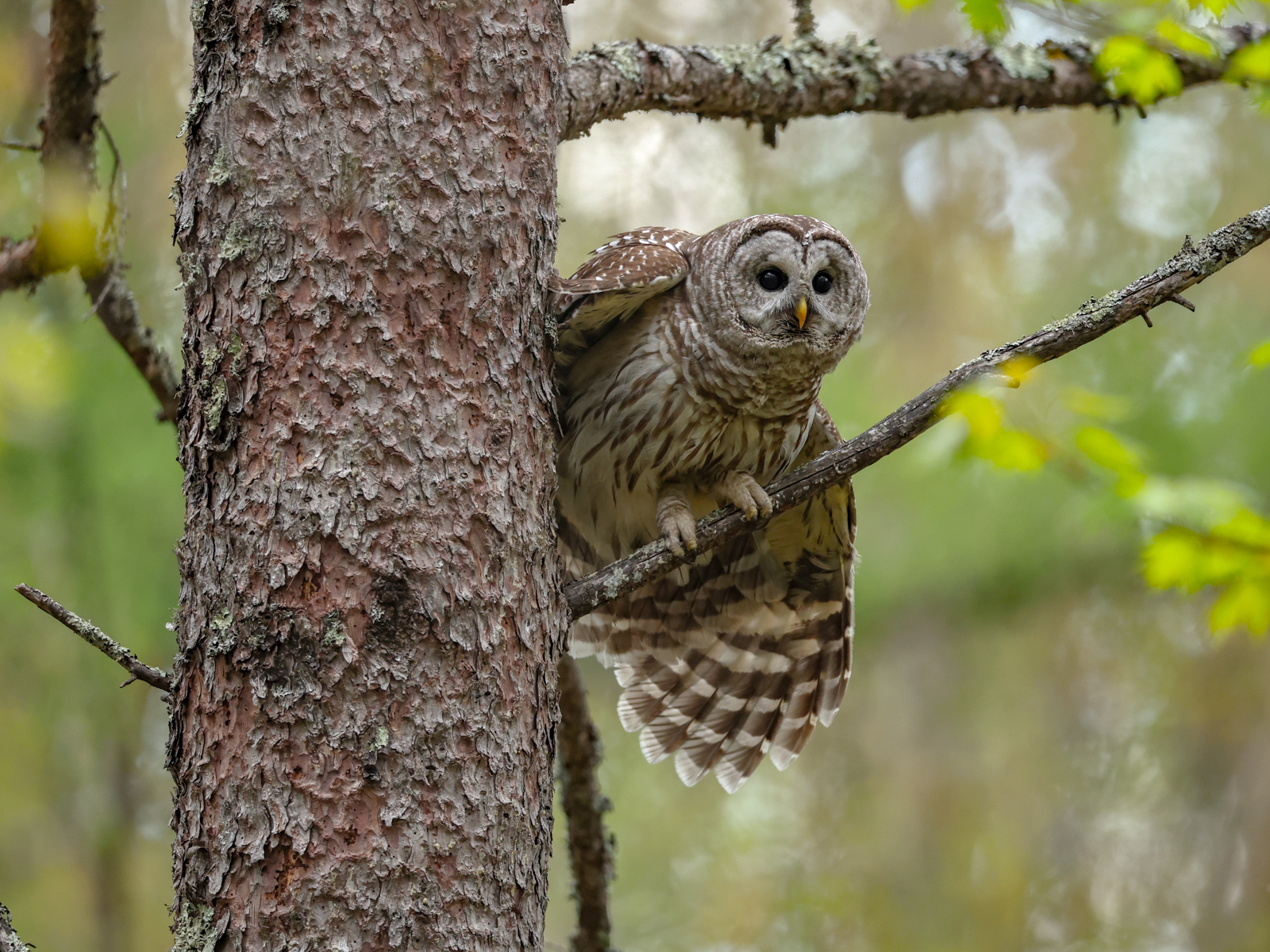
One of the best parts of owning a northwoods forest is realizing you can step outside and find experiences on par with anywhere else you’ve traveled. Our 102 acres are a mix of mature oak, maple, aspen, birch, and basswood, along with spruce, cedar, tamarack, black spruce, and both white and red pine. The oaks play an important role, producing heavy acorn crops that draw in wildlife each fall. Whip-poor-wills nest in that oak litter, which is how this place earned the name “Whippoorwill.”
This morning, I grabbed my camera after hearing a pileated woodpecker somewhere deeper in the woods. By the time I spotted it, it was already in flight, crossing a path about 50 yards ahead. I followed in that direction into an area with heavy deadfall and clear woodpecker activity; good enough to stop, crouch, and wait. Not long after, I heard a barred owl call from very nearby. I turned just in time to see it move between trees. When I got binoculars on it, I realized it had joined a second owl on the same perch. A mating pair!
They were roosting above a small black spruce and sphagnum bog nestled between two low ridges. I stayed along the edge of one ridge, about 40 yards away, and worked for a clear line of sight through the dense cover. It wasn’t easy, but I managed a few shots of both birds together:
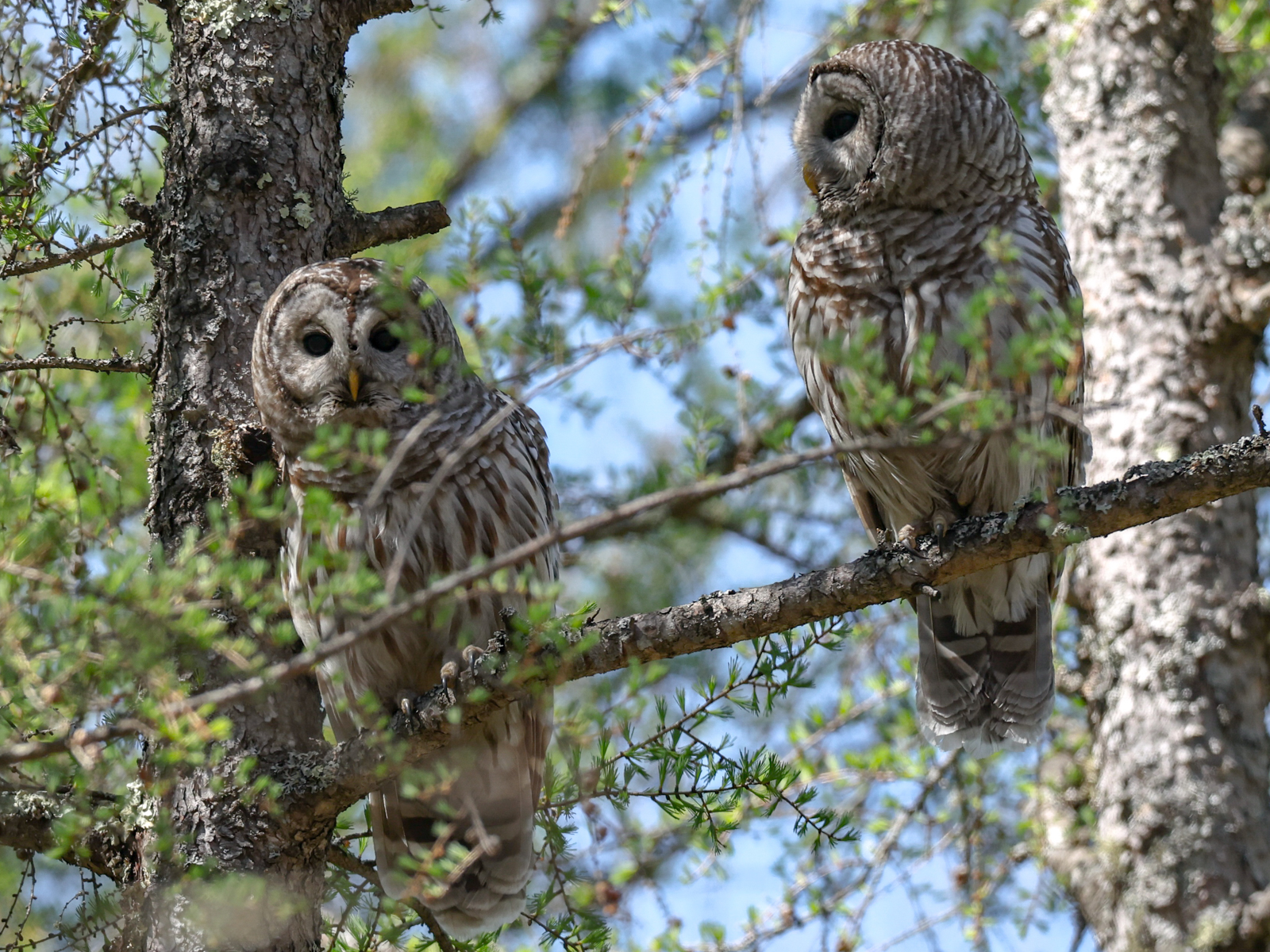
Eventually, one owl took flight, and I began moving to different positions, capturing each bird individually. Being alone in the woods with a pair like this is something special. Quiet. Focused. Completely absorbing.
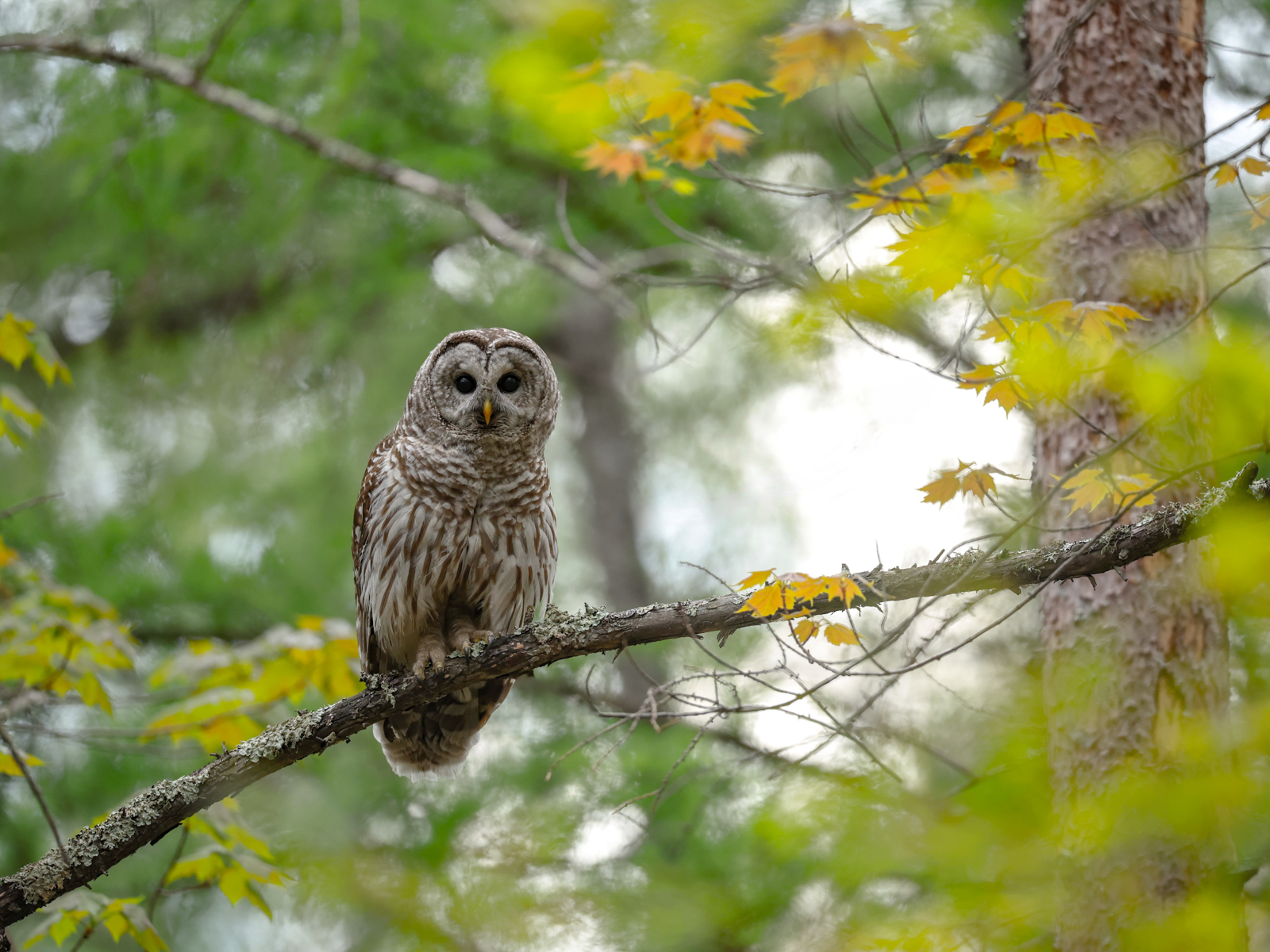
As I moved around, a pattern started to emerge. Each time I began to back away, the male would drop to the forest floor and give a deep, throaty call. At the same time, the female shifted to another tree and began flapping her wings in a way I hadn’t seen before, paired with a different vocalization. When I stepped back in, they would settle again.
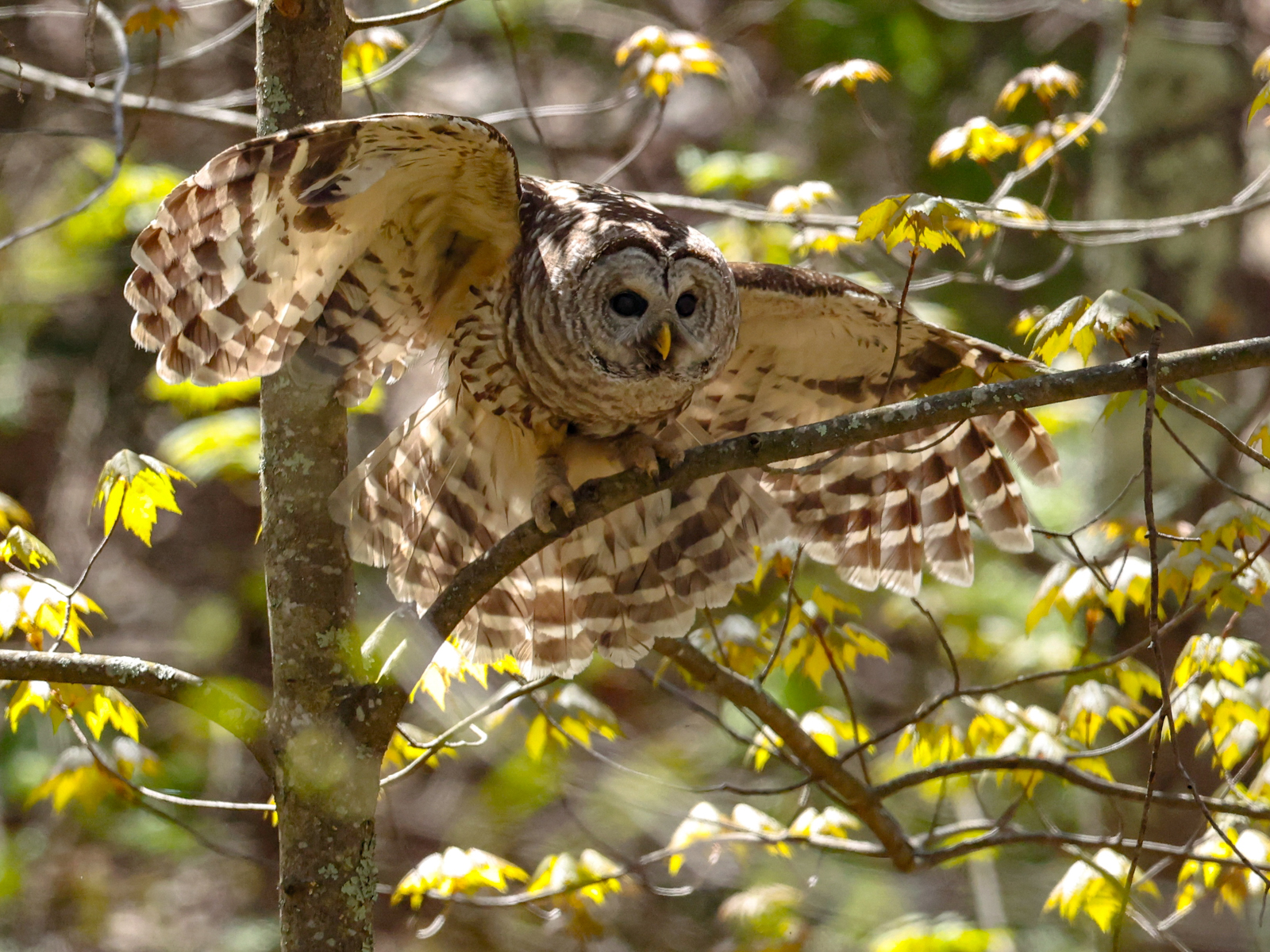
After watching this repeat a few times, it clicked: I was likely moving too close to a nesting cavity. They weren’t just reacting, they were trying to draw me away. At that point, I stopped and left the area. They have enough to manage raising young without added pressure, and barred owls won’t hesitate to defend a nest if needed.
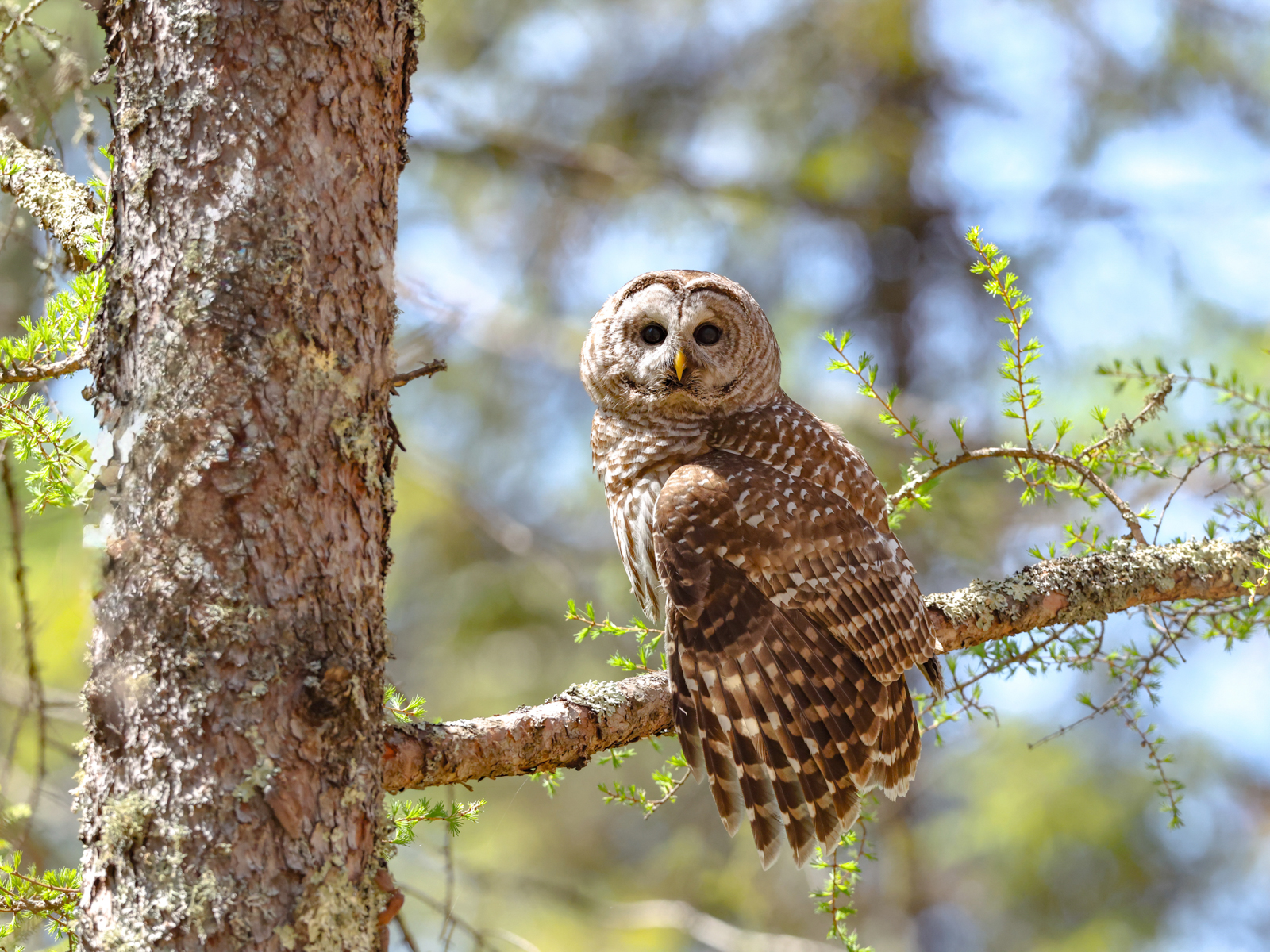
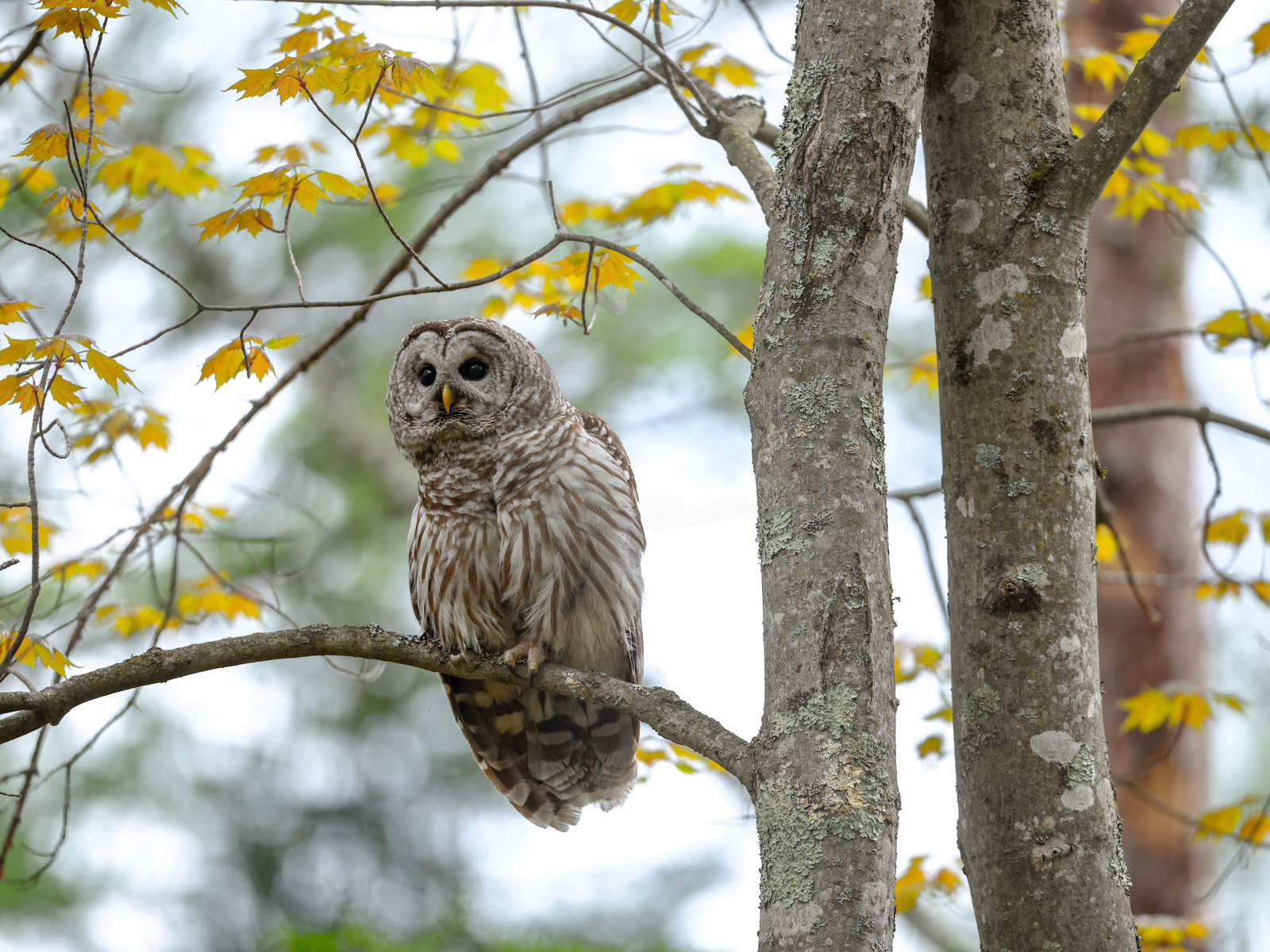
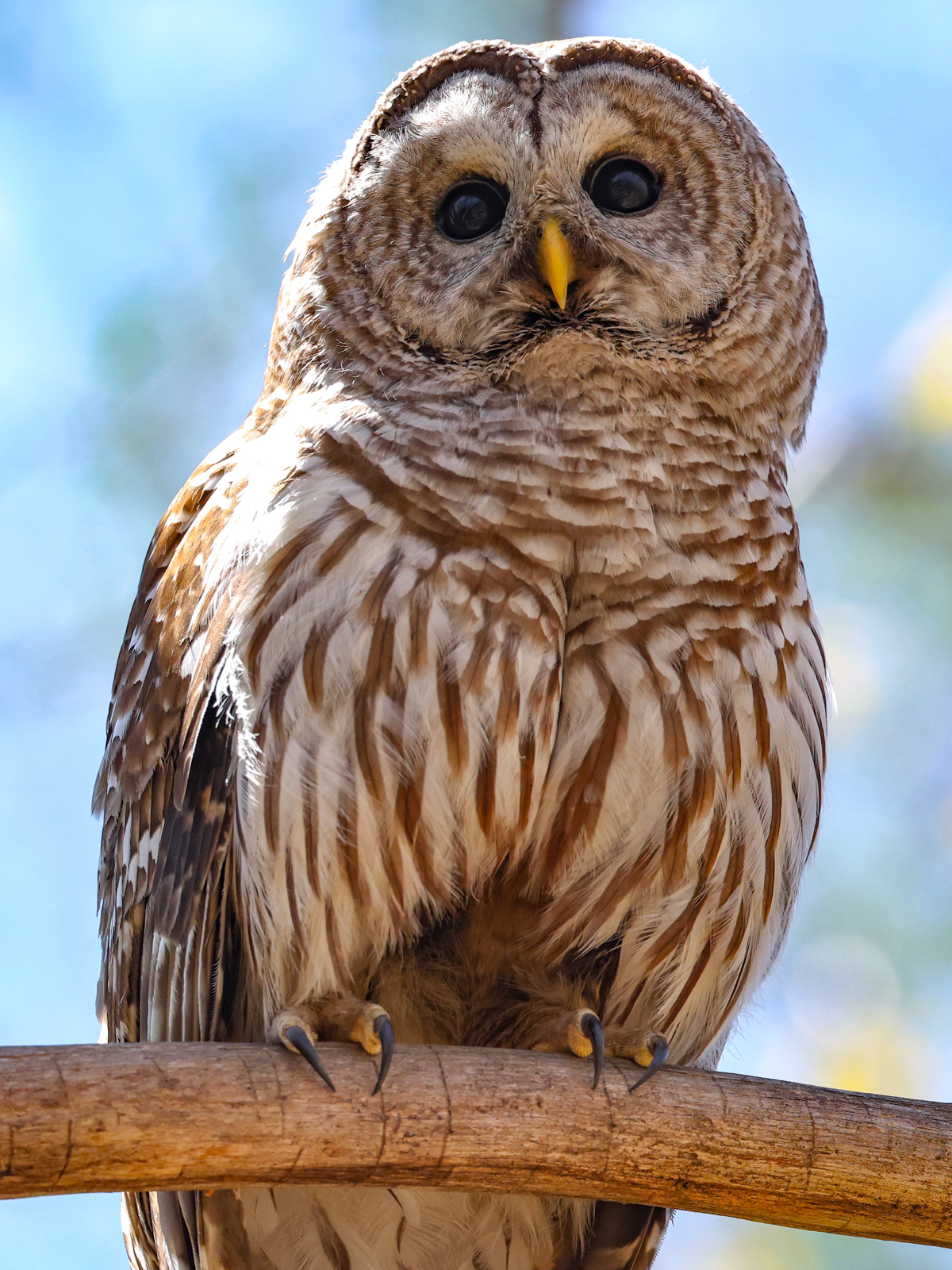
Based on their behavior, I’d guess the owlets are at least two to three weeks old, but not so young that both adults won’t leave them briefly. It will be another couple of months before they fledge. I’ll come back later and observe from a greater distance to see if I can locate the cavity and maybe catch a glimpse of feeding activity
Forest life is amazing!
- Paul