A Rare Encounter
He slips between the forest trees like a shadow. My eyes search intently, but I cannot find him. I have no choice but to sit quietly and wait. Eventually I will hear the heavy flutter of his wings or the magnetic “drumming” that this largest of woodpeckers is known for. Occasionally I will hear its ghostly call echoing through the trees.
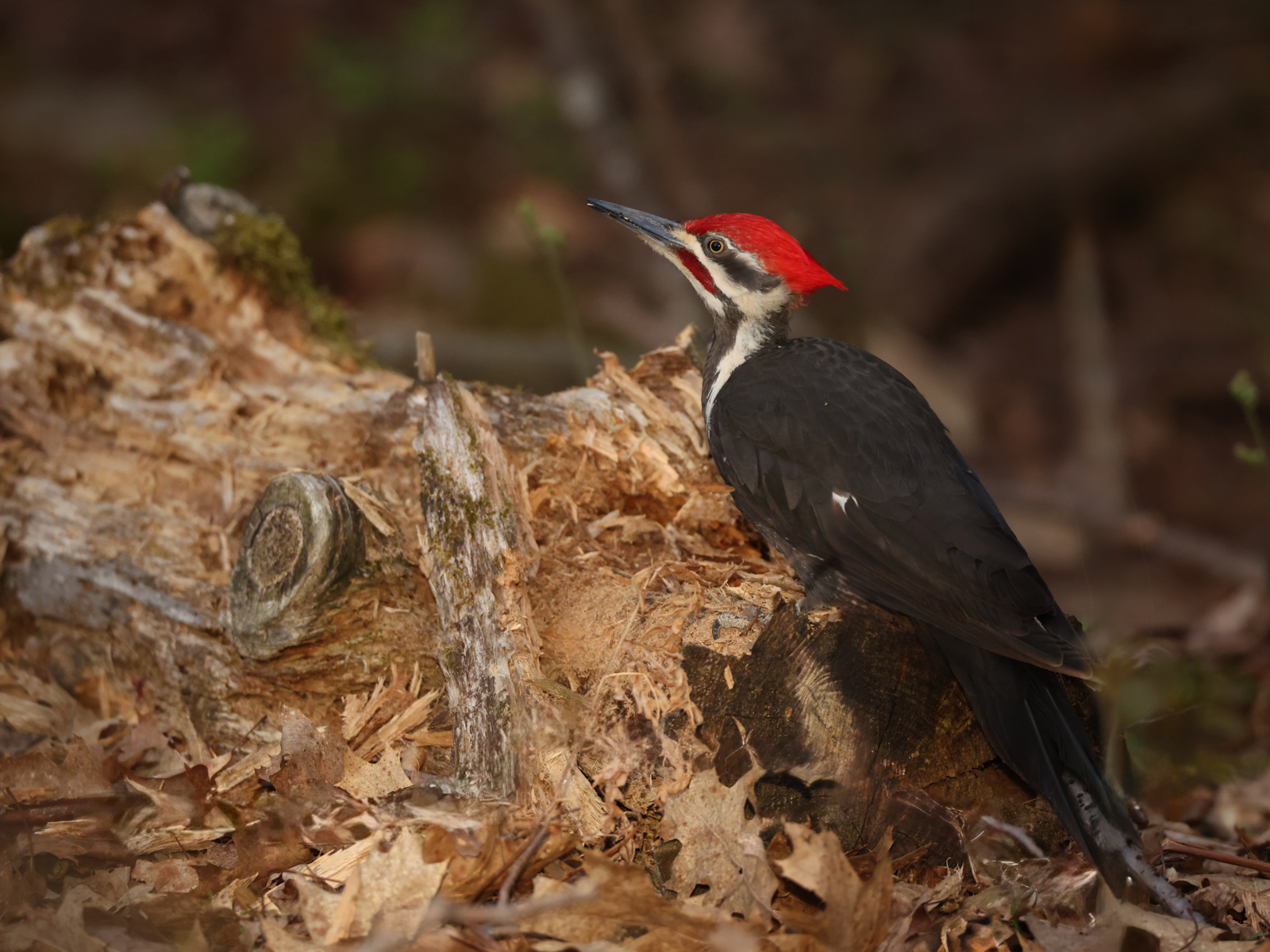
Pileated woodpeckers are indigenous to the United States. Douglas County Wisconsin is a core stronghold where mature forests, extensive wetlands, and dead fall all come together to create ideal habitat for this keystone species.
I finally spot him midway up a tree and only manage a few photos before he’s gone again. This is the way of it while trying to photograph these woodpeckers.
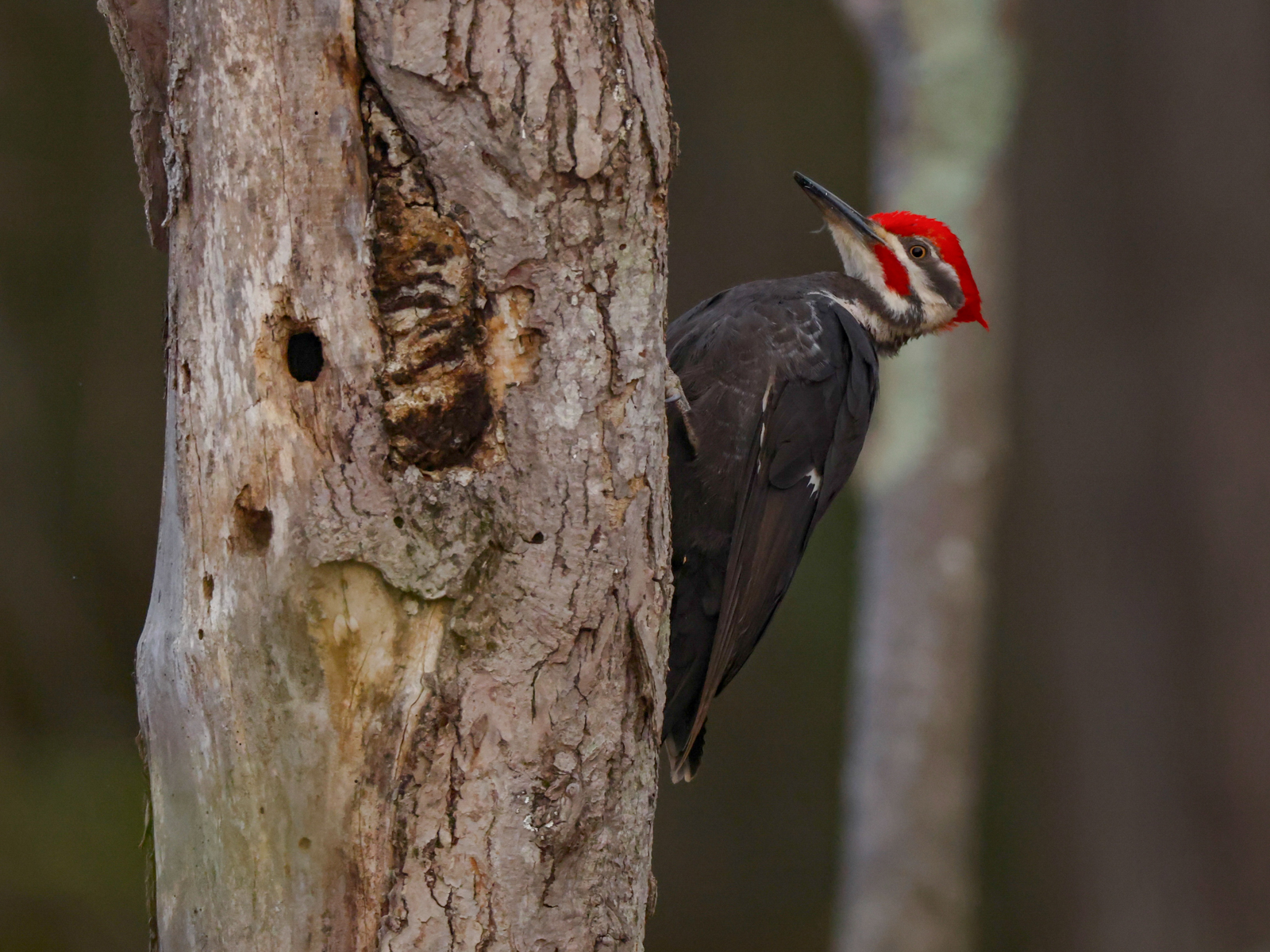
When I catch up to him again, I barely lift my lens before he is back in the air. This time he flies low and lands behind a small ledge on the forest floor. This is my chance. I approach the small berm with great stealth, until I begin to see the bright red crest bobbing up and down as he pecks away.
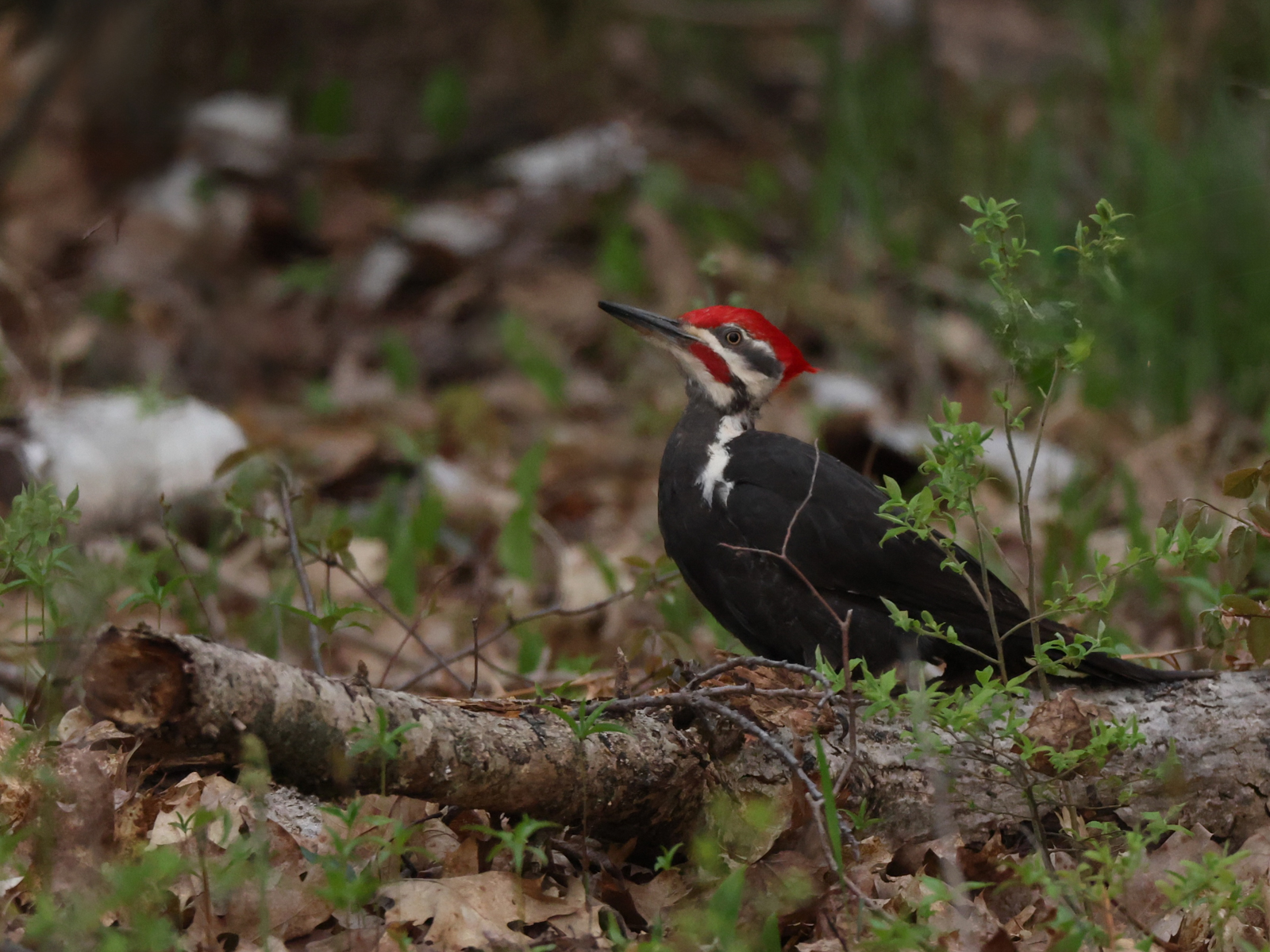
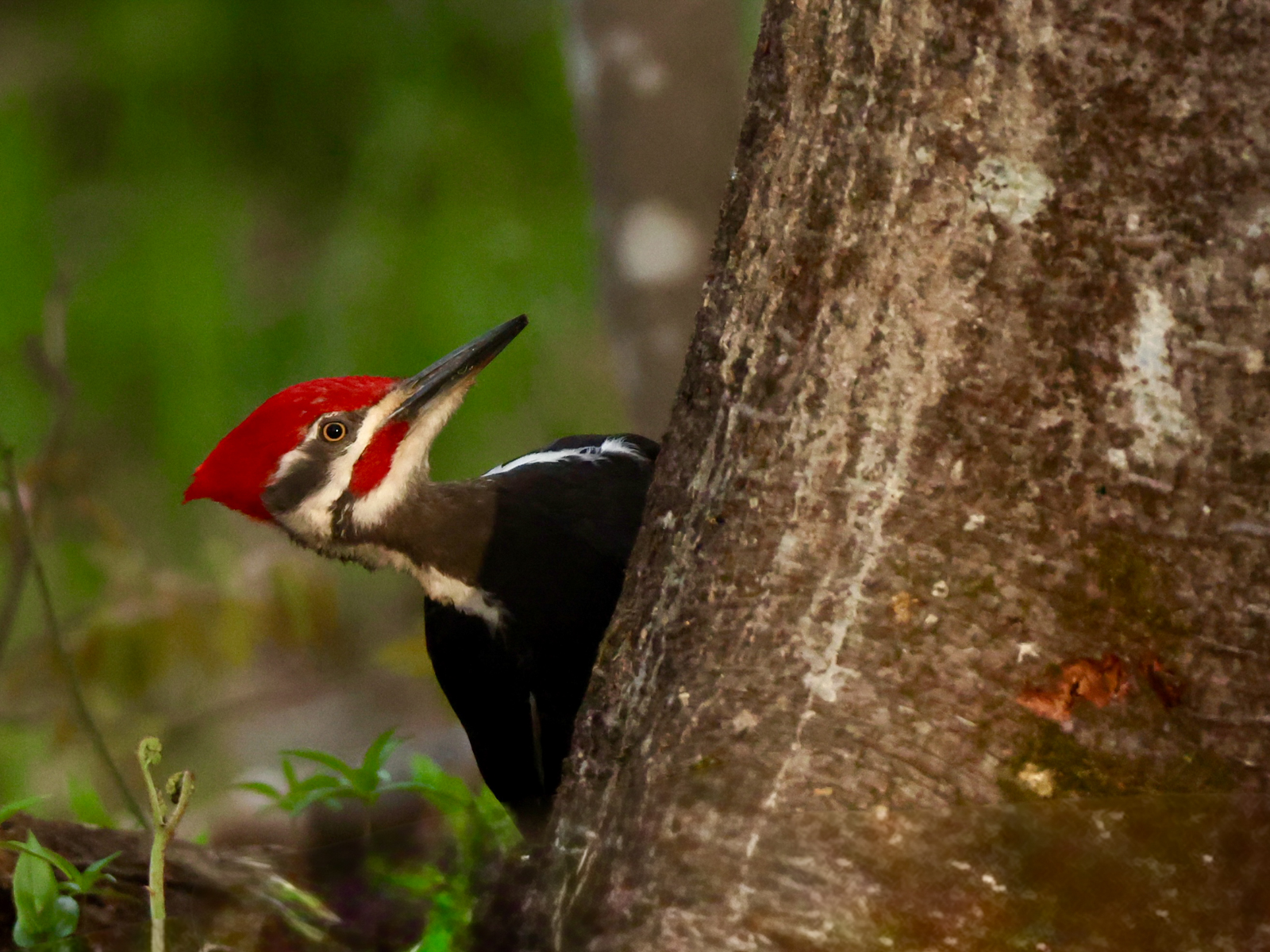
I watch him for some time as he works around this spot foraging directly from the forest floor. Then he is off again. He flies out of view. I do get one very nice capture when he appears to peak around the corner from the back of a tree.
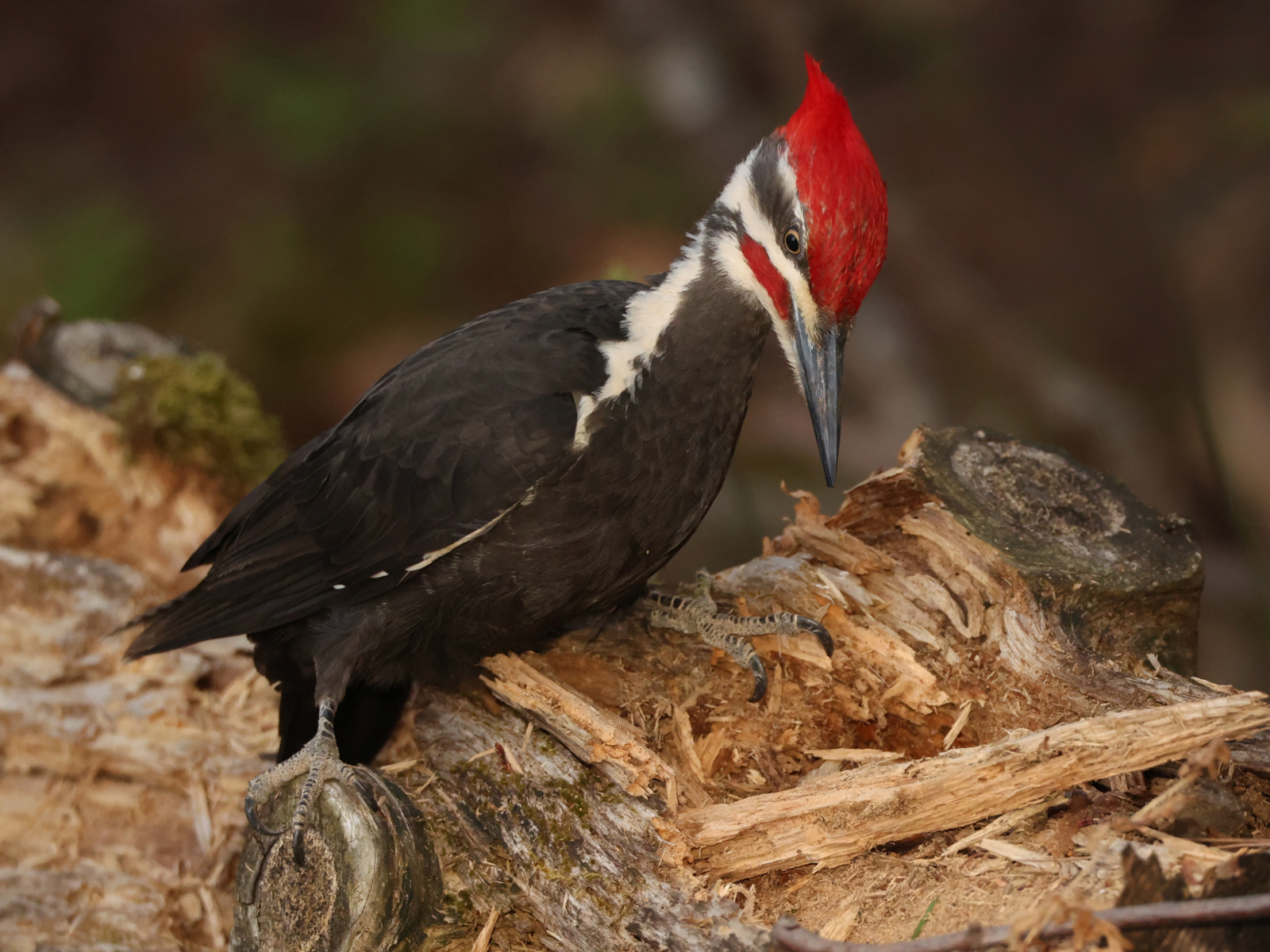
Now he moves a much longer distance. When he lands, I can see that he is a bit more elevated off of the ground this time. He is facing slightly away from me and at an angle. I reposition myself carefully, putting a pair of closely cropped trees between me and my target. This way I can approach quietly with little risk of him seeing me. It works. He is intently working on a short log lying length-wise on the forest floor. It takes me several minutes to reposition myself. I barely breathe knowing he could leave at any moment. I look for a line-of-sight that is clear of any obstructions. I find it.
I raise my lens until it is pointed in his direction, but keep it fully out of sight behind my two trees. Then I begin to edge sideways. Slowly. Painfully. I see him enter my viewfinder. I am 60 feet away if that. My electronic shutter is set to silent. I fire away.
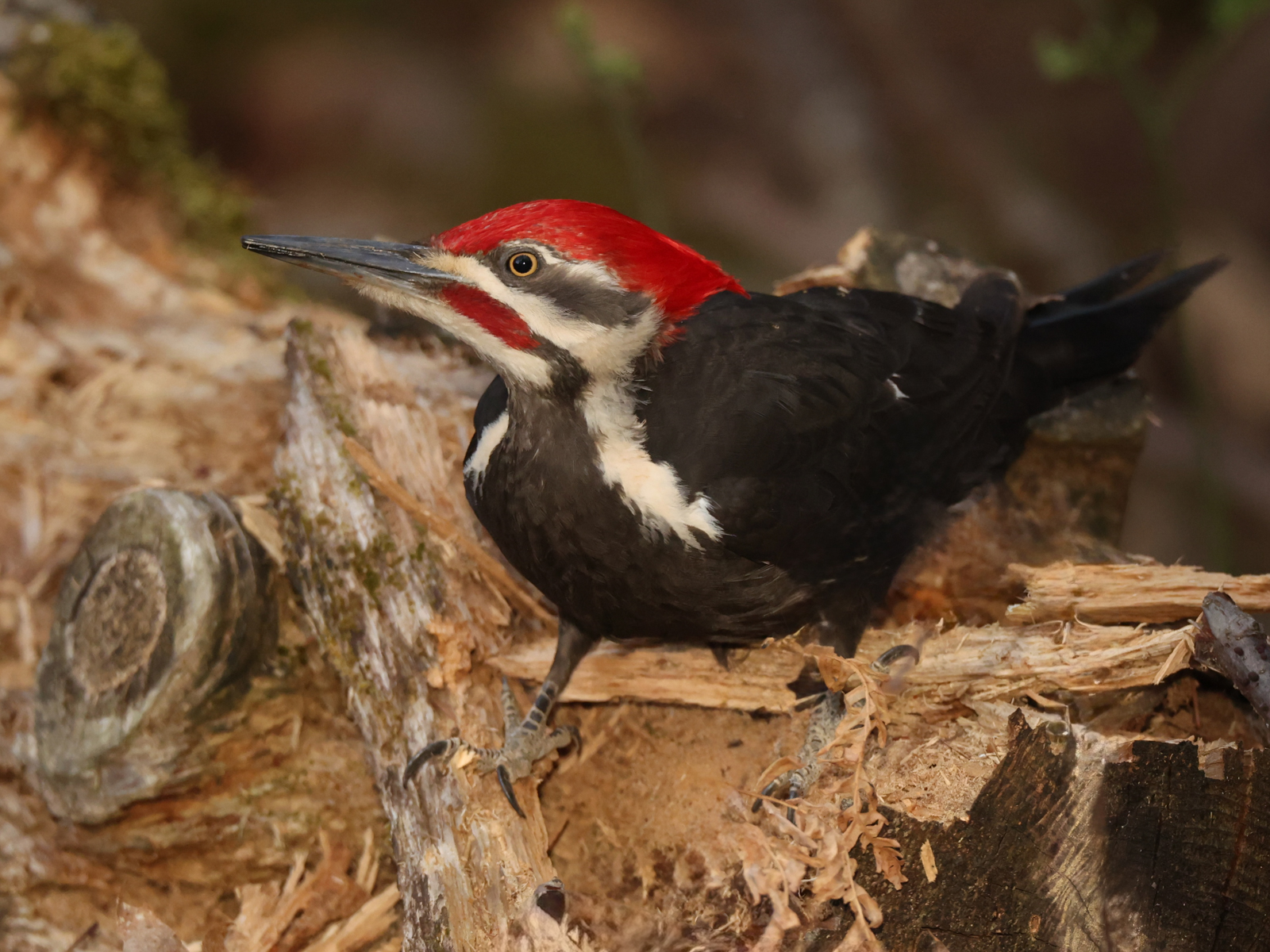
He changes his position before continuing to peck at the log. Now he is facing me. My shutter fires in bursts as I select my captures. He alternates repeatedly between heavy pecking and lowering his head to feed on the exposed insects. I want to capture the action of him eating the insects, but I am not positioned to see into the cavity when he lowers his beak to feed. These woodpeckers have a very long, sticky tongue that they extend to essentially lap up insects. I would like to have seen that.
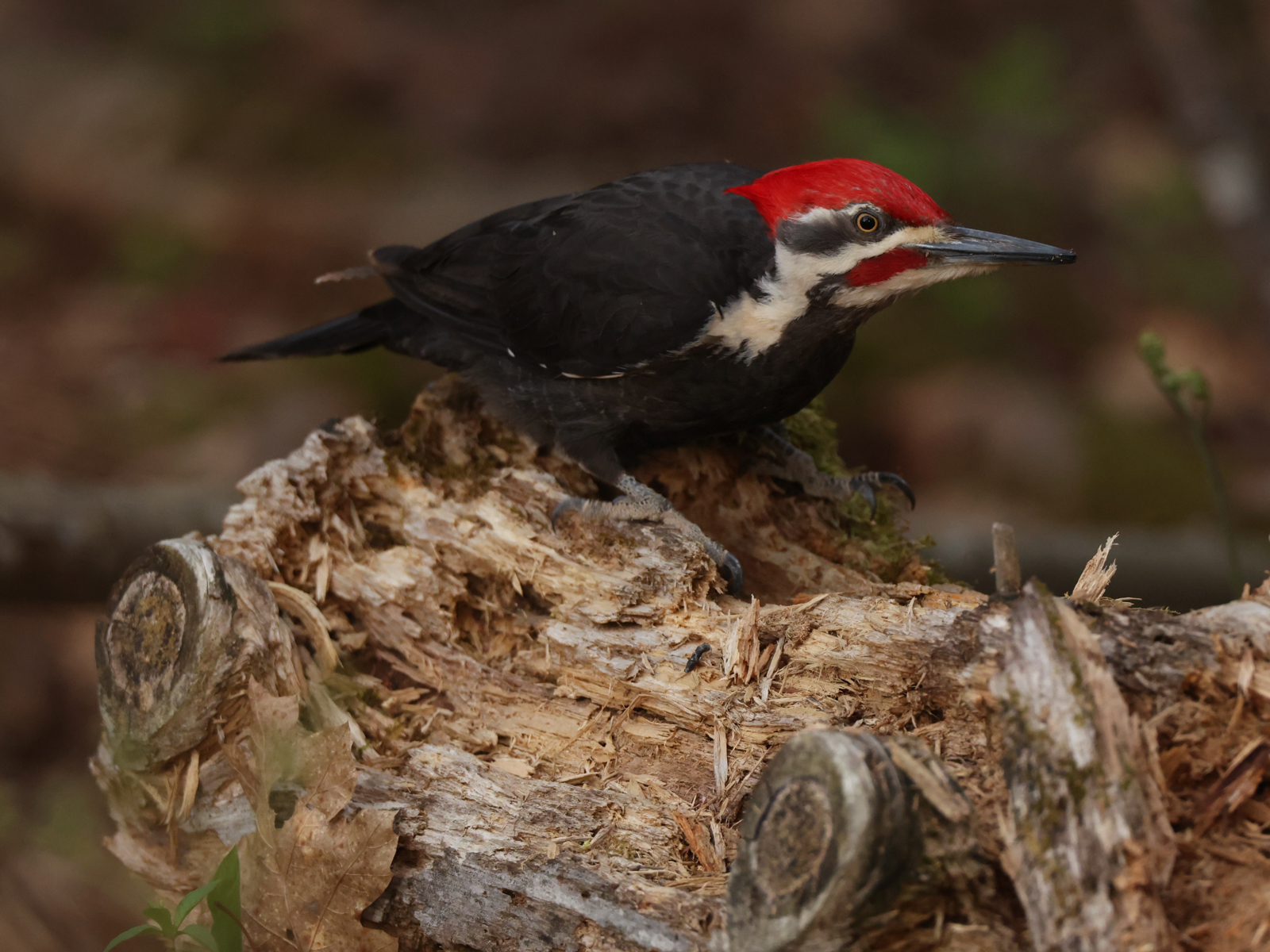

I switch my Canon R5 II camera to high speed video without even lowering it. This is from practice and intimately knowing my camera’s controls. The higher frame rate slows down the motion when played back. Remarkable. One video capture clearly depicts the force with which this woodpecker is hammering on this log. It is shocking. I have read that their skulls and brains are cushioned to withstand these repeated high-impact blows. In addition, the tongue, when retracted, wraps back through a cavity around the skull for additional protection. Crazy.
I manage to alternate between additional photo captures and high speed video until he eventually finishes his work on this log and moves on to another tree. I am proud that I was able to stay hidden and was not the reason that he left.