
"Mystery Globes" Found In Our Forest
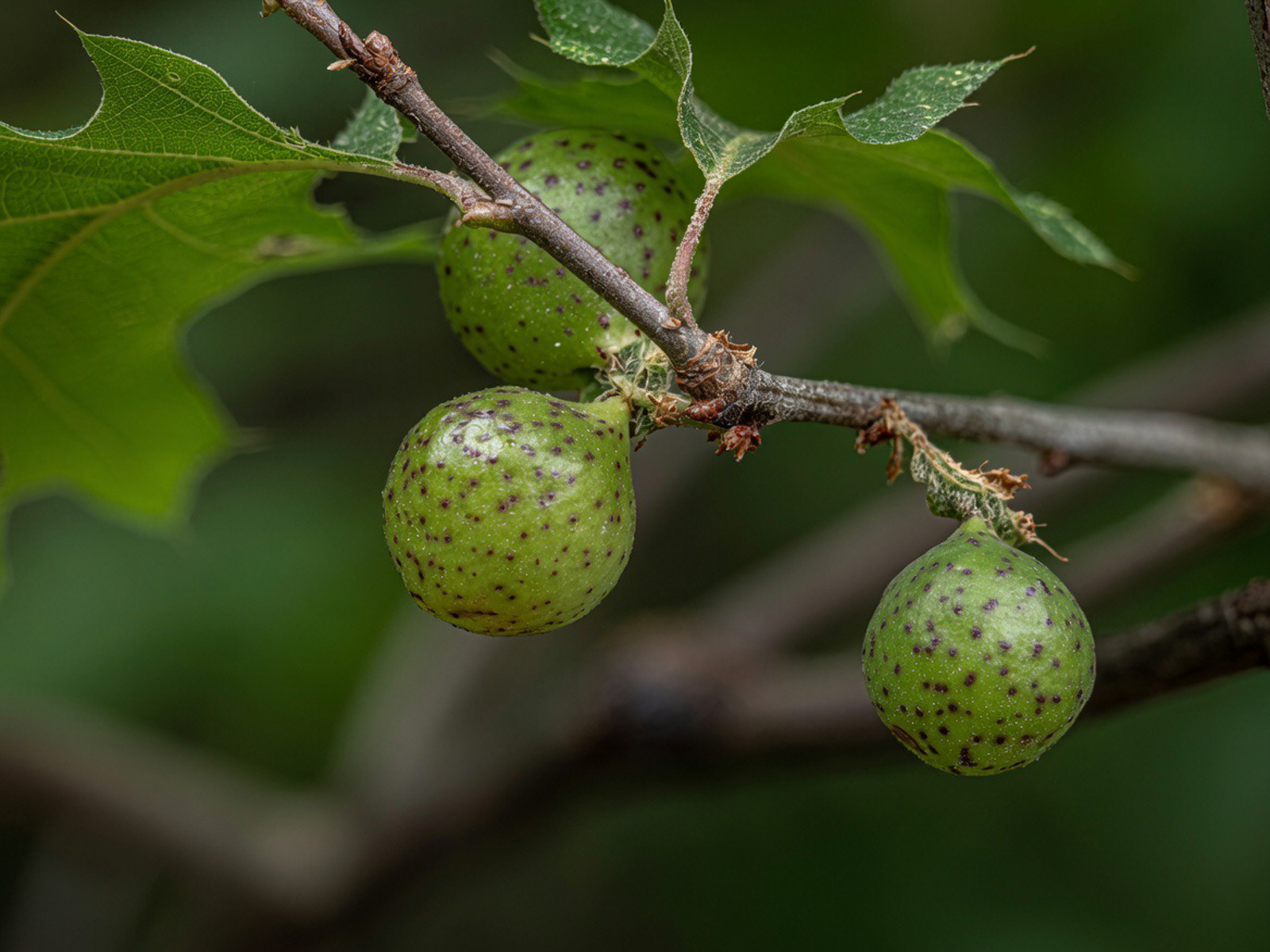
Walking the edges of our oak rich forest forest today, I expect to see leaves and miniature acorns this time of year - not little green globes hanging from the twigs like marble‑sized ornaments. I started noticing these spheres on our oak trees over the past two weeks. Some were bright green, some were speckled, and a few were papery and brown as if they had finally dried out. But what are they? I thought oak trees only had one "fruit" and that was the acorn.
This post is my field notebook on what they are, how to find them, and how I’ve been photographing and dissecting them to reveal what I now understand is hidden inside.
The best time to spot these globes is when new oak leaves have fully unfolded. I found them by slowing down and scanning the outer ends of the branches.
• Hanging from short side twigs, usually just below or beside a cluster of leaves
• Ranging from pea‑size up to a big marble or small ping‑pong ball
• Smooth‑surfaced and green, often dotted with tiny brown or reddish specks
From a distance, they look like some kind of odd fruit. Once you’ve trained your eye, they jump out of the repeating pattern of leaves and twigs, and you realize just how many are scattered through the under-story.

Despite their fruit‑like appearance, these globes are not part of the fully natural tree. They are oak galls, often called “oak apples" or "gall apples" and they are not part of the tree's natural cycle, yet they are made entirely of the oak’s own tissue. Let me explain as the story behind them is surprisingly intricate. A tiny gall wasp, usually overlooked in everyday life, injects an egg into a developing oak bud or very young leaf. Along with the egg, the adult female gall wasp introduces chemical signals that re-direct the oak’s growth. Instead of forming a normal leaf, the plant swells into a hollow ball around the developing larva. So these smooth, green globes are custom‑built nurseries for the larva. Actual plant tissue is shaped to feed and shelter the insect living inside. The oak invests tissue and energy, but the impact is localized. The tree continues about its business, carrying a scattering of these little spheres along its branches.
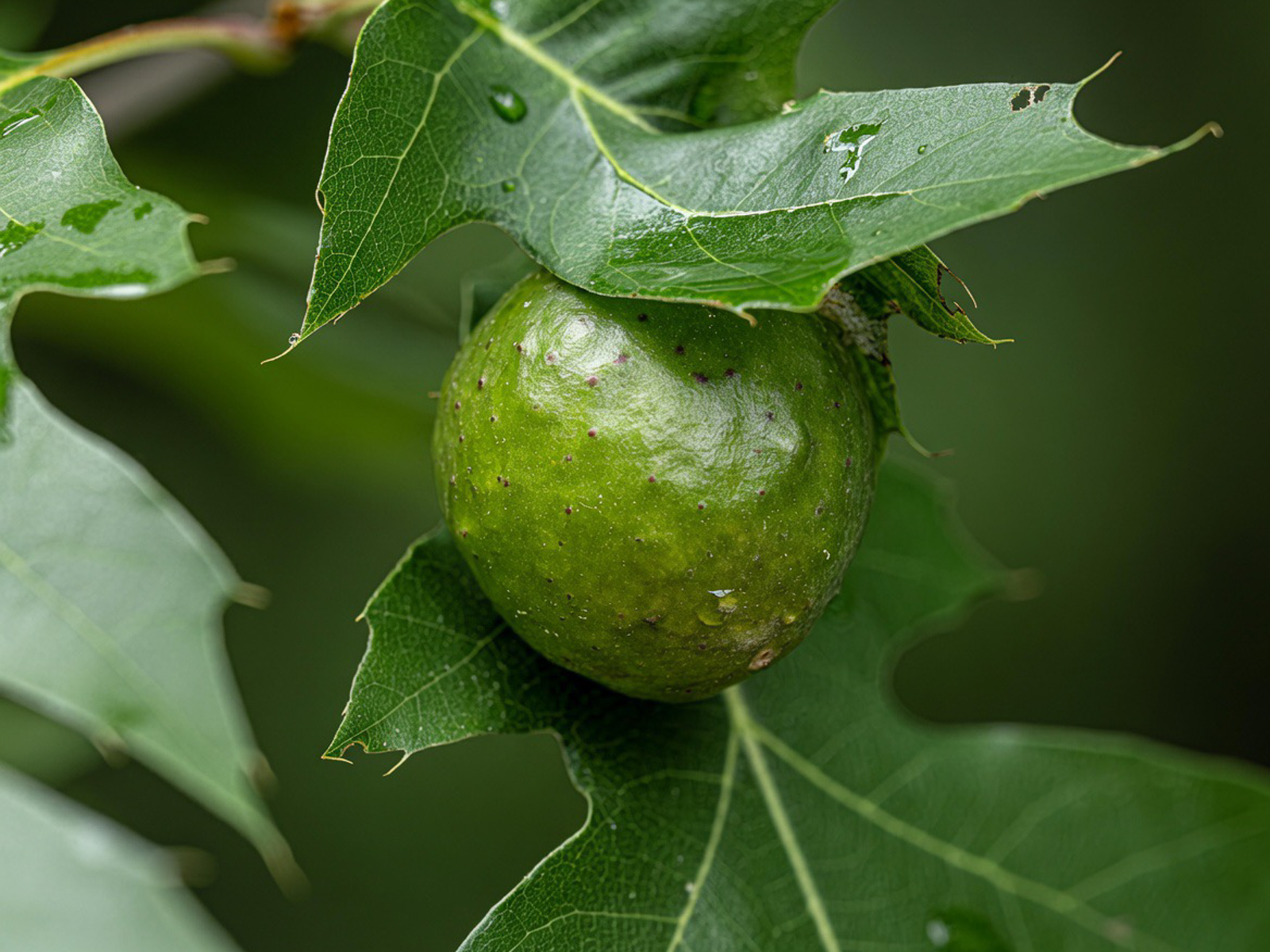
I started out photographing these galls in place on the trees. I treated them like little wildlife subjects. They don’t move on their own, but the branches in the wind sure do, and the forest light can be pretty moody. I finally decided to take these pictures on a cloudy day which means more even light for my macro purposes. I looked for a few specific compositions:
- One capture frames the gall along with the supporting twig and enough oak leaves that a viewer can recognize the species. This is the “where does this live?” shot.
- Next, a detailed capture where the gall fills much of the frame, with one or two leaf lobes acting as supporting shapes and leading lines.
- Then I want a number of macro shots capturing my dissections of a few globes to show what's inside
I have "Focus Bracketing" turned on in my camera. This is a great feature because it will automatically shift focus to cover sharpness at various depths on my subject. Then I can feed the resulting 20-30 images to Helicon Software to stack the images and see focus across my up-close subject. The results are pretty cool. I move from f/5.6 down to f/8 to keep a good portion of the sphere and nearby leaf veins sharp while still letting the background blur a bit. If your camera doesn't have Focus Bracketing, you can gently rock your camera body forward and backward, firing short bursts as the plane of focus slides across the surface. Then you can use a group of these photos stacked together with Helicon to get the same effect.
My favorite frames usually place the gall off‑center, letting the branch and leaf stems pull the eye back into the subject.
To really see what’s going on inside, I collect a small sample. The woods around are cabin are loaded with them, but I only take a few and leave the rest for the wasps, birds, and whatever else depends on them.
Back at the cabin, I set up a lightweight “studio” for the galls. This includes the dark, matte-black surface of my iPad and a diffused light source in the form of a soft LED lamp. I use a very sharp knife to cut the gall and then shoot images of the split halves and close-ups of the fibrous center capsule / chamber that contains the wasp larva.
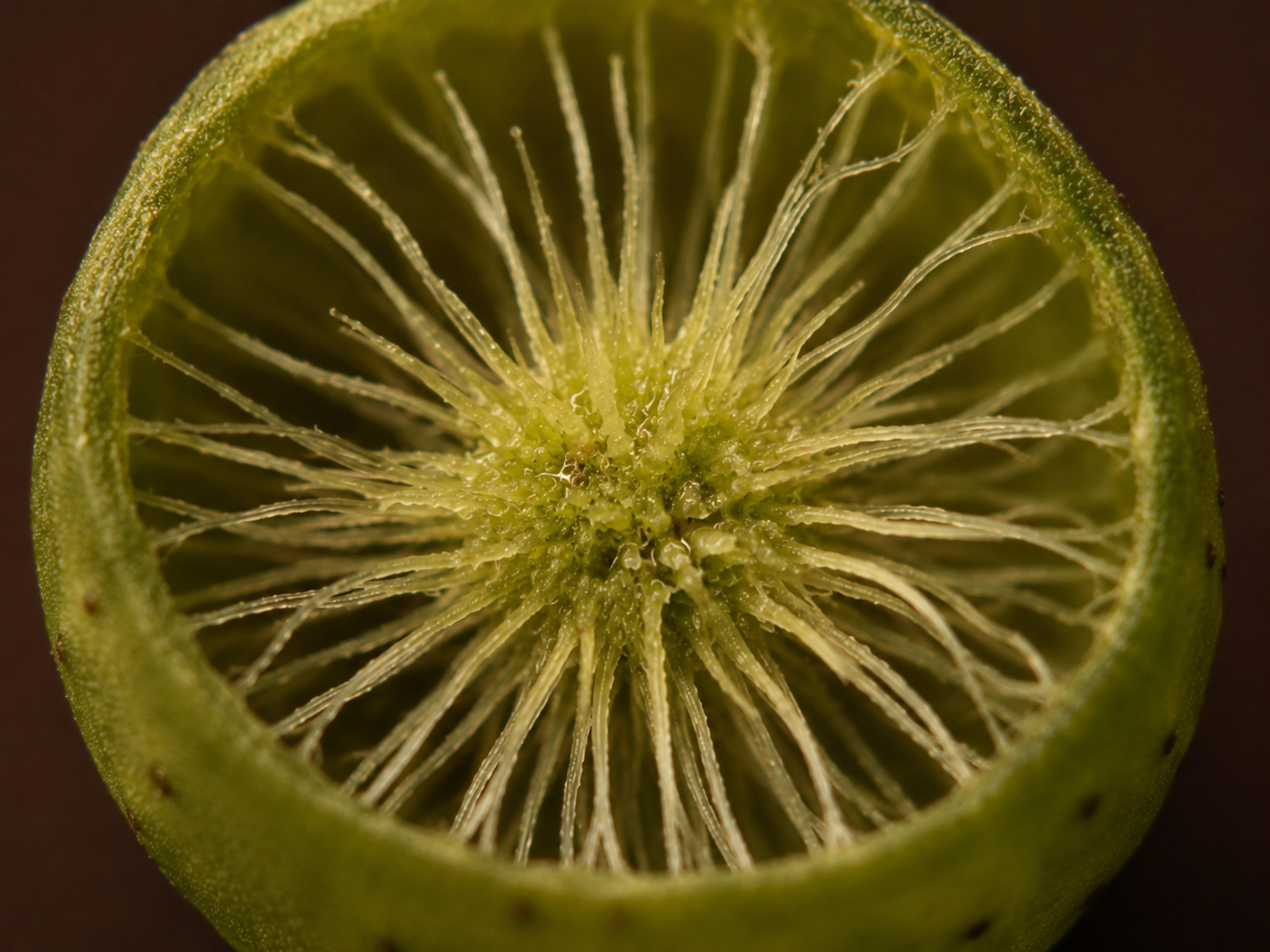
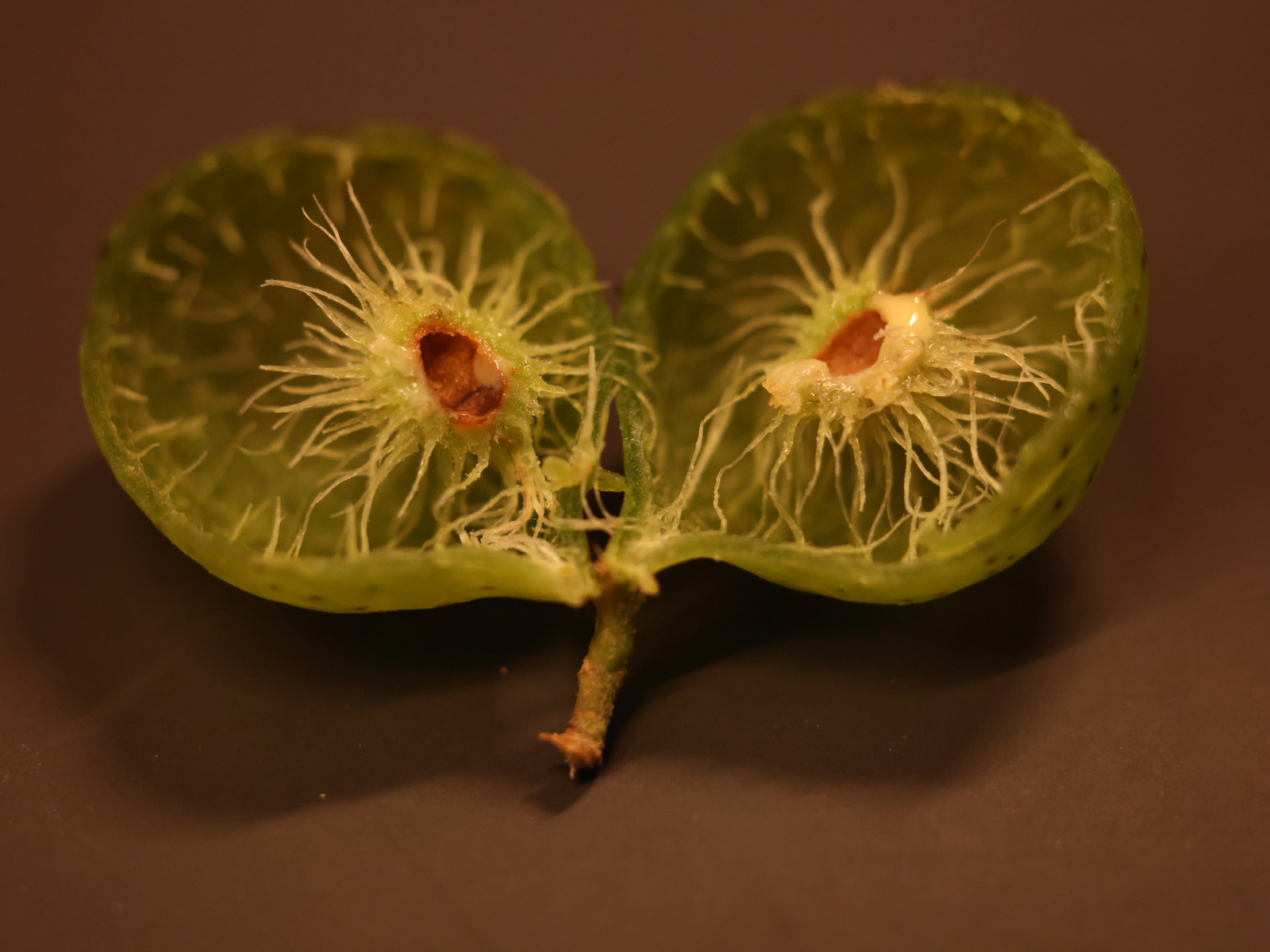
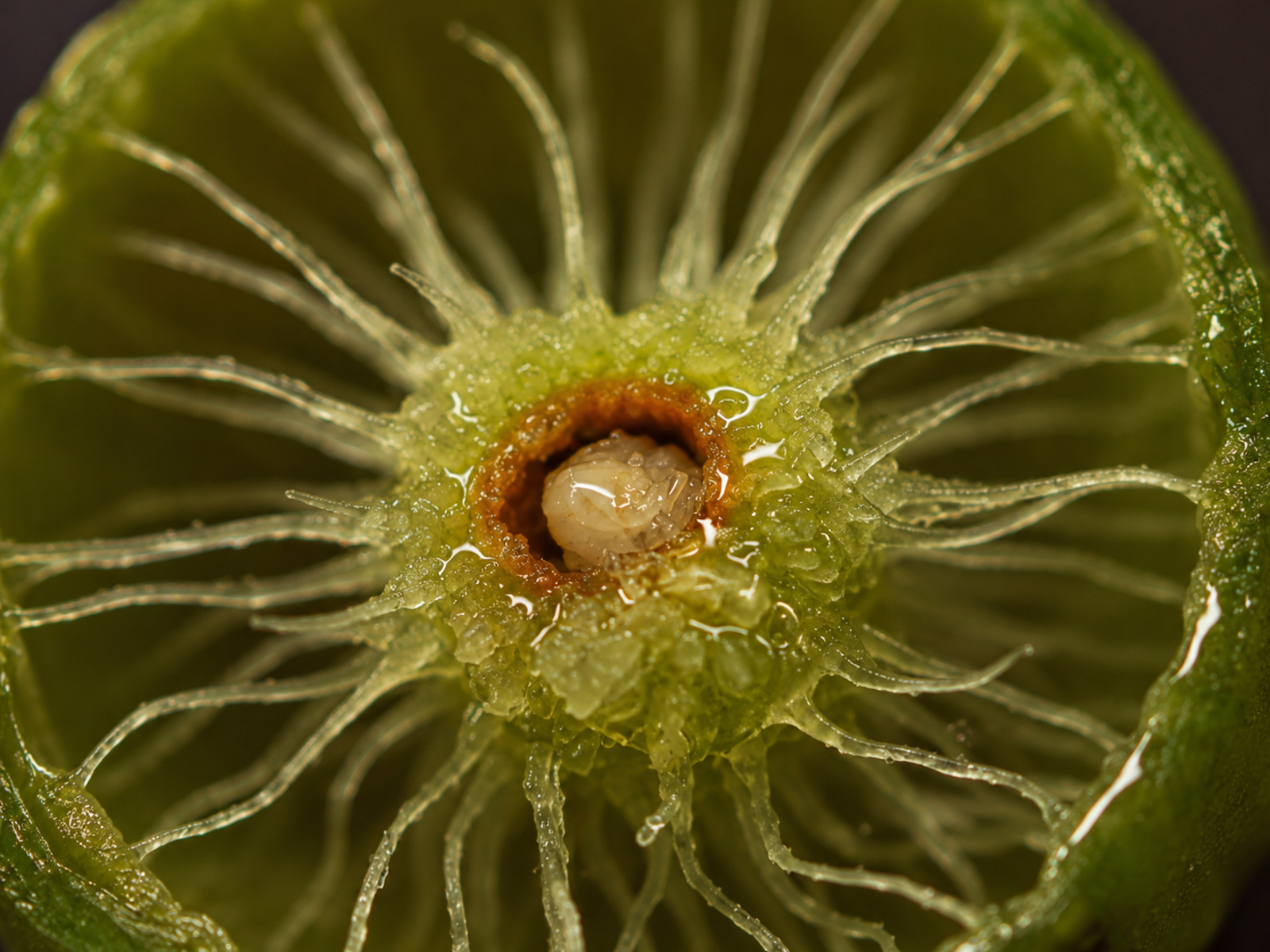
I use the same stacking method I described earlier. Photographically, the cross‑section looks like something between a botanical plate and an anatomical diagram: outer rind, inner texture, and a focused, central space where the chamber containing the insect lives.
The final act in my little series here is an empty shell with the exit hole for the mature gall wasp. There are a few of these brown globes evident right now and I'm sure these are left overs from last season. The once‑green galls dry and turn brown. The exterior becomes papery and light, still hanging from the twig even when the leaves drop to the forest floor in the Fall. The perfect round hole you see below is the opening where the adult wasp chewed its way out into the world, leaving behind an its empty capsule.
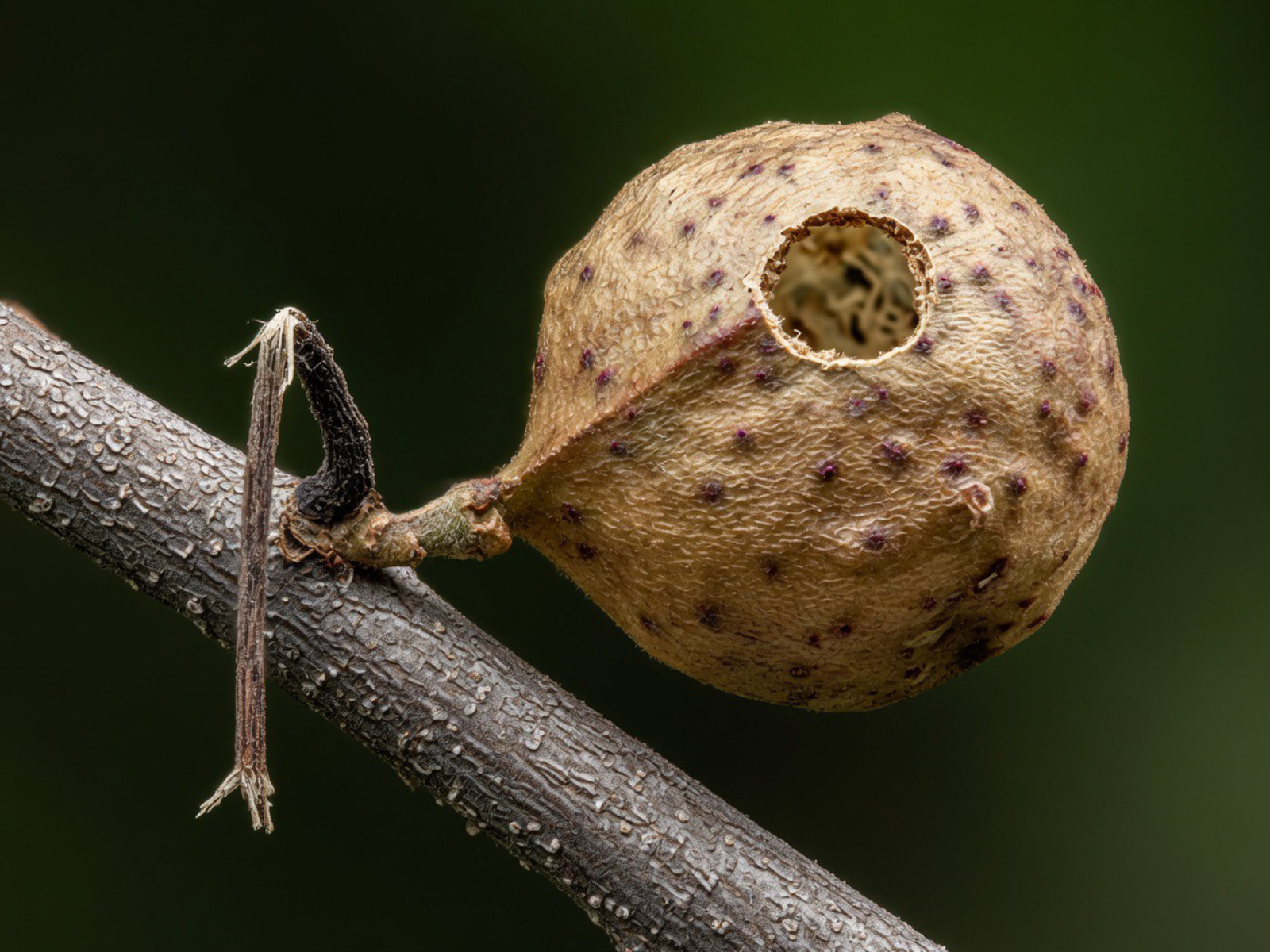
For me, these oak galls are a reminder that a familiar forest still holds strange, new, intimate stories. A tiny wasp can re-write the outcome for a single oak leaf. And the tree responds by building a spherical shelter, complete with food and walls. Most hikers never notice; this little drama plays out at the scale of a marble.
As a photographer, I now love them because they offer both structure and a cyclical narrative. On the tree, they’re small sculptural forms arranged among leaves and branches. On the table, they become cross‑sections and close‑ups that reveal unexpected architecture inside. And across the seasons, they run from fresh green globes to weathered, empty shells.
Next time you wander under oaks and spot one of these globes, pause for a moment. You’re looking at the intersection of plant and insect, growth and manipulation: a forced, miniature collaboration that the camera can finally make visible.
- Paul